As outlined in Proposition 14, one of the goals of the California Institute for Regenerative Medicine (CIRM) is to help accelerate discoveries that enhance our understanding of central nervous system (CNS) disorders. As part of this goal, CIRM launched the Research using Multidisciplinary, Innovative approaches in Neuro Diseases (ReMIND) Program in 2023 with the ReMIND-L (DISC4) awards.
Through the 2024 ReMIND-L awards, CIRM is supporting large, collaborative research teams conducting expansive, integrated research projects, utilizing recent advancements in stem cell and genetic research, to address critical gaps in the study of neuropsychiatric disorders, including schizophrenia, bipolar disorder, autism spectrum disorder, and other conditions that significantly affect patients and caregivers throughout California.
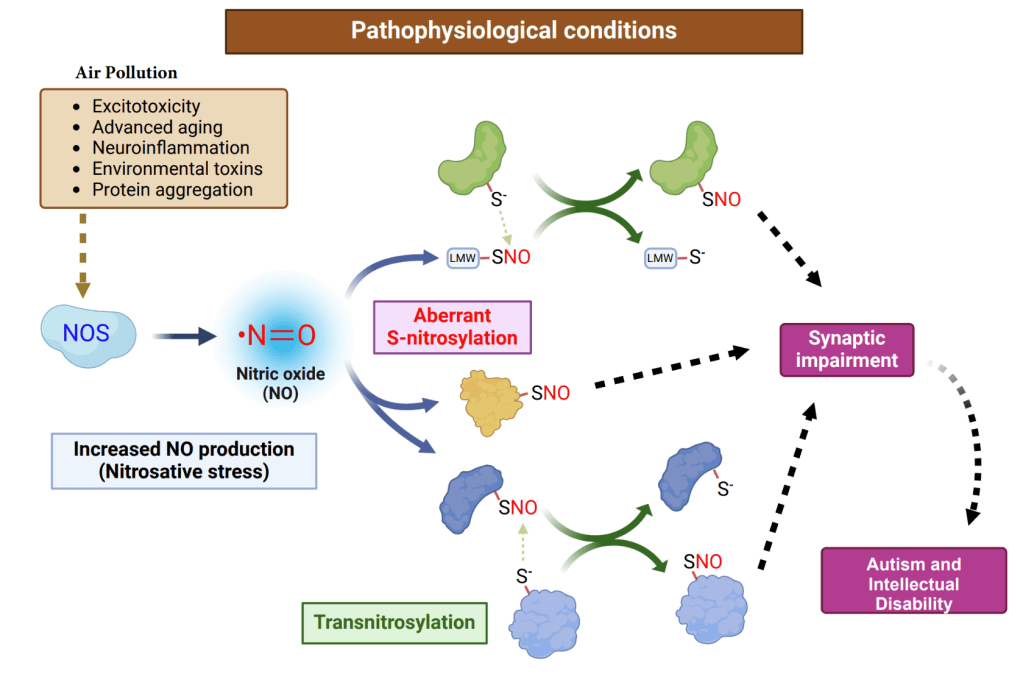
Principal Investigator Stuart Lipton, MD, PhD, and his co-investigators Tomo Nakamura, PhD, John Yates, PhD, Marisa Roberto, PhD, and Nik Schork, PhD, are researching how pollutants like PM2.5 and nitrogen oxides (NOx) contribute to Autism spectrum disorder (ASD) and intellectual disability (ID) by inducing redox stress, affecting protein function through chemical modifications like S-nitrosylation. Using advanced multiomics (integrated biological data analysis) techniques, including redox proteomics (protein oxidation study), researchers aim to uncover treatable targets and develop novel therapeutics for ASD and ID.
Some responses have been edited for clarity and brevity:
CIRM: Please share a summary of your research project. Is there a particular disease focus? Is there a broader question that this project is hoping to address?
Dr. Lipton: ASD/ID is extremely prevalent in modern society, with ASD alone are estimated to be present in 1 in every 36 births in the US. Except for symptomatic therapies, no definitive treatments exist. The origin, or etiology, of cases of ASD/ID not tied to rare genetic mutations still remains unknown, but uncovering the etiology and mechanisms involved could lead to new therapies.
Evidence shows potential causes of ASD/ID are multi-faceted and likely influenced through an interaction of genetic and environmental risk factors (GxE). Recent studies argue that the most important environmental factor is air pollution and has been shown to increase the risk of developing ASD/ID. Emerging evidence suggests that environmental air pollutants induce redox stress, activating pathological signaling pathways and thus contributing to human diseases, including ASD/ID.
Through the CIRM award, we are studying the mechanism for the causation of these events, which will allow us to identify treatable targets of ASD/ID phenotypes related to environmental pollutants using a multidisciplinary approach. This will lead to the discovery of novel therapeutic drugs for ASD/ID.
Our unique approach to the effect of air pollution on the etiology of ASD/ID involves multiomics, highlighted by redox proteomics as the initial approach, evaluating chemical reactions such as protein S-nitrosylation, which was initially discovered by our group in biological material.
While other reactions with NOx occur, S-nitrosylation (SNO, meaning the addition of nitrogen and oxygen onto a sulfur in the amino acid cysteine of a protein) is the predominant effect of NOx on proteins. This reaction modulates protein function and causes dysfunction in disease states. Our group not only pioneered the discovery of these reactions in biological systems but also discovered how to characterize them in the human brain and human induced pluripotent stem cells (hiPSC)-derived brain organoids (mini-brains) using modern mass spectrometry approaches coupled with novel and specific probes such as “SNOTRAP” (SNO trapping by triaryl phosphine) to identify these modifications.
Judging from other neurologic diseases where we have applied SNOTRAP to human brains and organoids with Alzheimer’s disease and Parkinson’s disease, we expect to find on the order of 2,000 aberrantly S-nitrosylated proteins, many of which participate in the causation of autism.
CIRM: In your words, why is research on neuropsychiatric disorders and diseases affecting the central nervous system (CNS) so important? How could this research positively impact patients in California and beyond or influence how scientists study and understand the disease?
Dr.Lipton: Neuropsychiatric diseases such as ASD/ID are among the most debilitating afflictions of human society, and their incidence is rapidly growing. We have identified a new cause related to climate change-induced air pollution contributing to the development of ASD/ID. Our newly identified chemical mechanism, involving contaminants in air pollution that affect protein structure in the human brain, offers hope for new treatments to be developed.
CIRM: The ReMIND program is a pilot for collaborative, multi-investigator funding for foundational basic discovery research. Could you speak to the timeliness and impact of such funding structures more broadly and why you think such funding structures will be impactful for CIRM’s mission?
Dr. Lipton: Research over the last 25 years has evolved into multidisciplinary approaches by teams of scientists versed in various aspects of science, ranging from molecular genetics to protein structure and stem cells. The ReMIND program allows for teams of scientists to work together to take on brain diseases with this unique approach, fostering individuals performing experiments as well as the group in aggregate evaluating and moving forward with the project using the most current techniques.
CIRM: CIRM is celebrating its 20-year anniversary this year. In your words, can you describe CIRM’s impact over the last 20 years?
Dr. Lipton: In my view, CIRM is now on the cusp of providing novel therapies base on the use of human stem cell to either develop new drugs or cell-based treatments for previously untreatable diseases.
The last frontier in this regard is the brain. With the new ReMIND-L program, CIRM is forging into this last frontier in order to better the lives of Californians and others throughout the world.
Learn more about the ReMIND program at cirm.ca.gov/remind.
 The Stem Cellar
Useful information, thanks for sharing!