Written by Holly Alyssa MacCormick
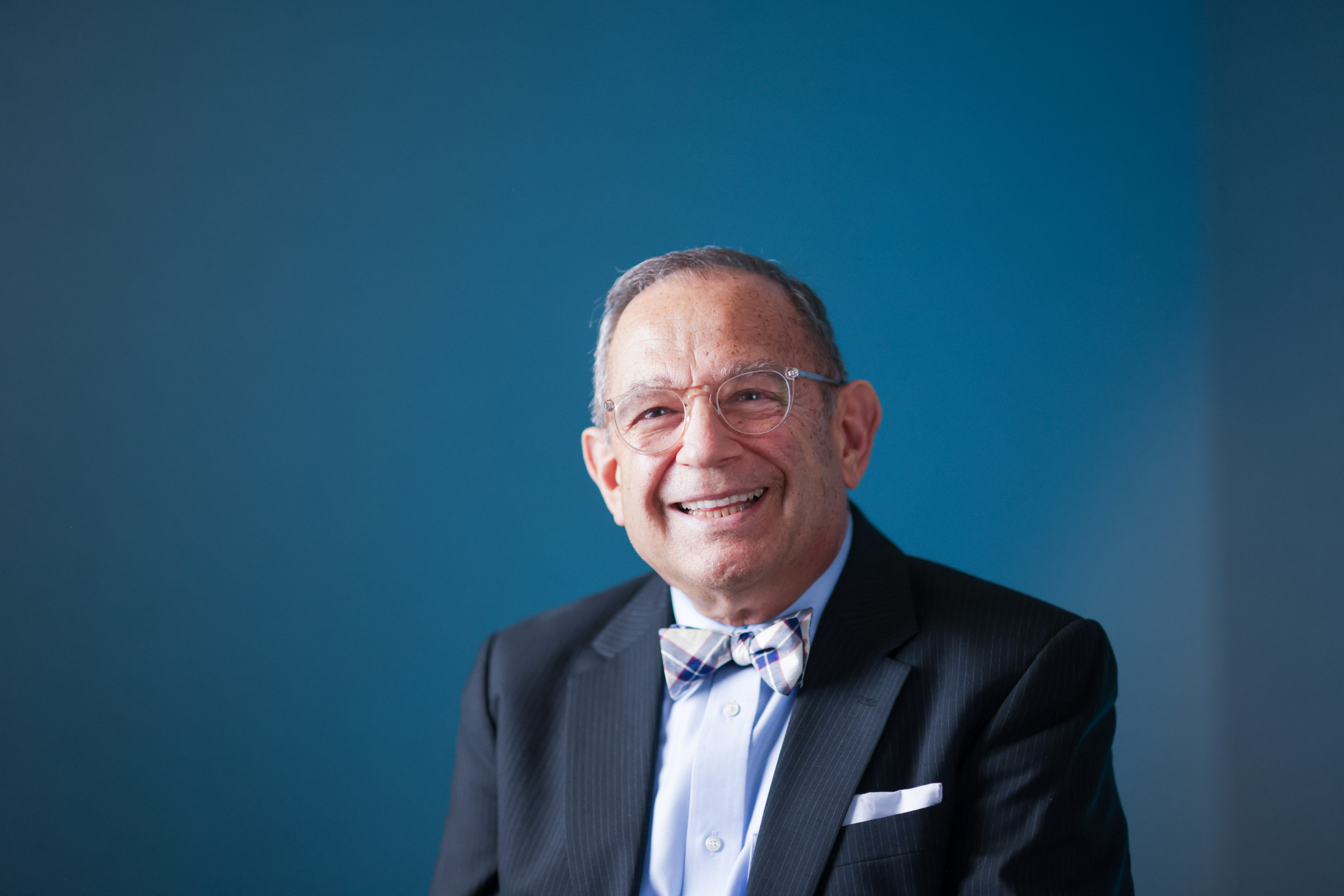
If you ask Vito Imbasciani to tell you about his career, you won’t get a simple answer, but you will get a great story about service, both to his country and the people of California.
Imbasciani, PhD, MD, FACS, Colonel (ret.), is the chair of the board for the California Institute for Regenerative Medicine (CIRM), a position he has held since March 28, 2023. In that role he oversees the body that sets the agency’s priorities and allocates funding for cell and gene therapy research in the state.
The path that led Imbasciani to CIRM is not a conventional one—over the years, he has had careers in music, medicine, the Army, and politics. For Imbasciani, the common thread in each role is his desire to serve, connect with, and care for others.
“If anyone had ever asked me in my life, including up to recent years, where would I be in five, six, or seven years, I would have been wrong in my prediction absolutely every time,” said Imbasciani. “But looking backwards, I can connect the dots in a way that makes a lot of sense. A life of service has opened many doors to me, I just happened to walk through them not knowing exactly what would be on the other side.”
For Imbasciani, his work with CIRM weaves the threads of his musical, military, and medical life together while enabling him to serve others on a large scale.
“When Governor Newsom asked me to chair the board of CIRM, I recognized it’s not just the 40 million people in California who might benefit from some of these genetic and cellular therapies that we’re developing, but it’s the whole world,” said Imbasciani. “Who could say no to that?”
From music to medicine
Music set the stage for Imbasciani’s career. He studied piano at Cornell University, earning a master’s and doctorate in musicology with the support of a Fulbright award that enabled him to spend a year (1973) writing his PhD dissertation in Rome. During this time, he learned Italian, an experience that impressed upon him the importance of making the effort to speak the local language and its impact on human connection.
Imbasciani continued to pursue music and the arts, working as a professor of humanities at the University of Florida in Gainesville (1975-1976) and as an assistant professor of music and orchestra conductor at Middlebury College in Vermont (1976-80). Yet he became increasingly interested in medicine. He returned to school and earned his medical degree in urologic surgery from the University of Vermont College of Medicine followed by a six-years of urological surgery training at Yale University.
Not long after, he accepted a Presidential Commission in the Medical Corps of the United States Army. He served four wartime deployments. He was a field surgeon in Dhahran, Saudi Arabia in 1991; a battalion surgeon in Forward Operating Base Kalsu, Iraq—an area that saw heavy combat and in Balad, Iraq in 2004; and a post-acute care surgeon in Landstuhl Regional Army Hospital in Germany in 2007, where many of his patients had limb loss, traumatic brain injury, PTSD, and/or spinal cord injuries. His final deployment was to care for wounded soldiers in a recuperative ward in Camp Williams, Utah. He received the rank of colonel before retiring after 27 years of service in 2014.
“Studying music at Cornell opened up a wonderful world of research and taught me to solve problems at a very high level,” said Imbasciani. “To go to medical school at Vermont, do a residency at Yale for 6 years in surgery, my specialty, and immediately after that training was over, to go to combat, to war—it gave me a wonderful opportunity to give back and I think I’ve done that.”
In tandem with his career as an Army surgeon, Imbasciani worked as a urologic surgeon at Southern California Kaiser Permanente (1997-present) and was appointed director of government relations there (2004-present). He was also the 145th president of the Los Angeles County Medical Society.
As director and president, he advocated and voted for these organizations to support stem cell research and the 2004 ballot initiative that created CIRM. He was also actively involved in legislation related to patient rights, Emergency Medical Treatment and Labor Act regulations, and how the state should direct the funding streams created by statewide ballot initiatives.
In 2014, Imbasciani ran for the California State Senate representing the 26th Senate District. He didn’t win, but his campaign caught the attention of Governor Jerry Brown, who appointed him secretary of the California Department of Veterans Affairs (CalVet) in 2015. He was reappointed CalVet secretary by Governor Gavin Newsom in 2019 and served in this role until 2023.
“For eight years, I had the privilege of serving the needs of 1.8 million veterans,” said Imbasciani. “In medicine you see one patient at a time, you treat one patient, and ideally you cure one patient at a time. The opportunity to take care of soldiers in war gave another facet to that. Working in Governor Brown’s and [later in] Governor Newsom’s cabinets, taking care of 1.8 million veterans in California, that was the first opportunity to affect the well-being of whole populations. Not just one person.”

Chair of the ICOC
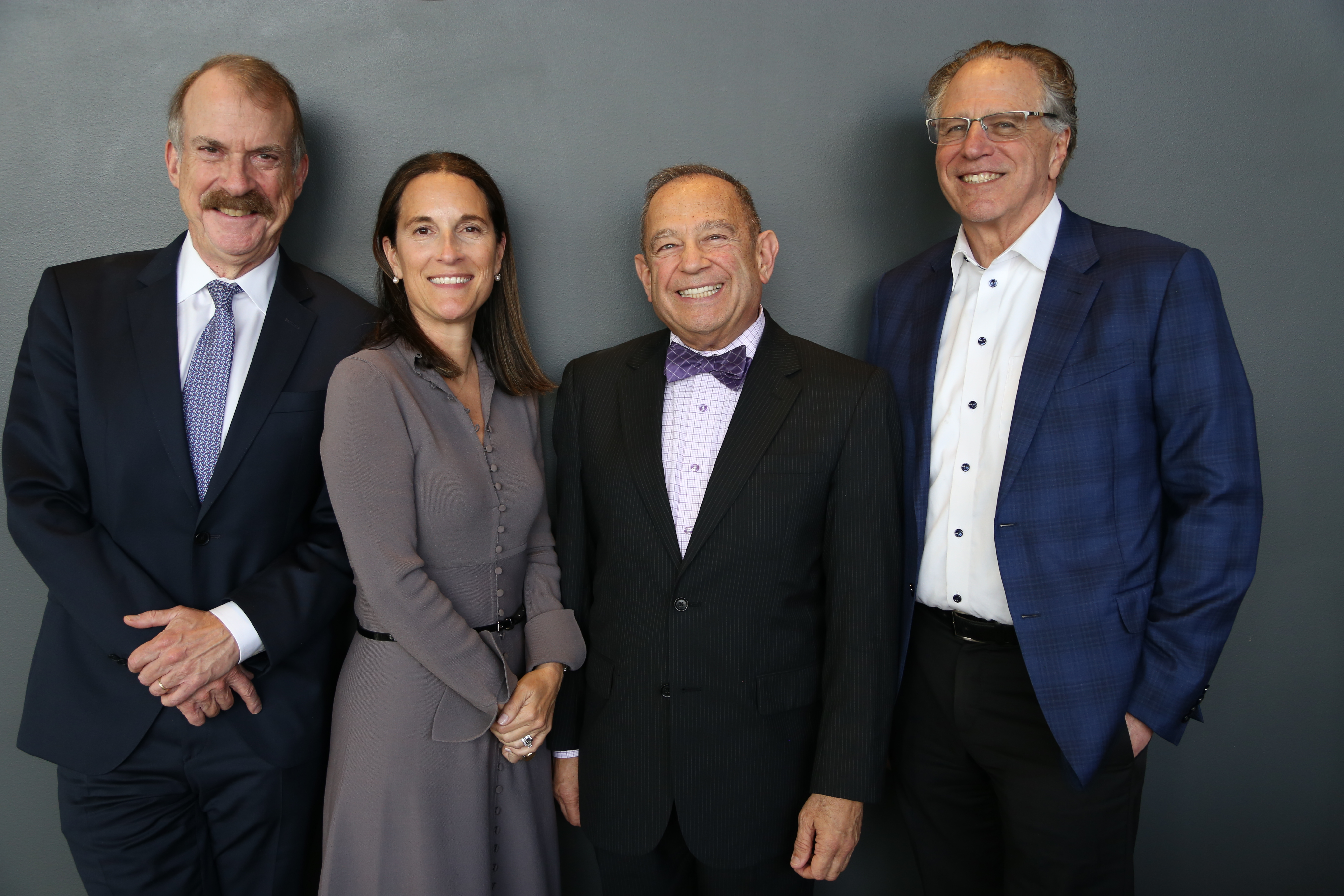
In 2023, Governor Newsom asked Imbasciani to Chair the ICOC, which is composed of up to 35 California-based research and biotechnology industry leaders, patient advocates, nurses, and university and institution executives.
As ICOC chair, Imbasciani draws on his unique perspectives of the patient experience, politics, and research. His time as a combat and civilian surgeon gave him the opportunity to treat and connect with some of the patients who could benefit most from the research that CIRM supports, such as people with spinal cord injuries, brain trauma, dementia, stroke, multiple sclerosis, and Parkinson’s. He has also seen how a seemingly small improvement in health from a drug or intervention can alleviate suffering and have a tremendous impact on a person’s quality of life.
“Little advances, little reversals, or even just stopping a disease from progressing helps keep people independent,” Imbasciani said.
For some patients, a treatment or therapy can be the difference between continuing to live in their own home or moving to assisted living.
“Nowhere in the world is regenerative medicine as advanced or on as grand a scale as it is in California,” said Imbasciani. “CIRM supports research, trains students, builds laboratories, and it’s the taxpayers and citizens of California that deserve absolutely all the credit. It’s their tax dollars that are funding this research.”
Since CIRM was formed in 2004, this funding has resulted in over 250 CIRM-supported clinical trials enrolling more than 4,300 patients, and research spanning over 85 diseases and conditions, plus more than 4,600 trainees. A 2019 report quantifying CIRM’s economic impact revealed that, with over 56,000 jobs created and over 50 new startup companies with roots in CIRM-funded projects, CIRM’s contribution to the state of California is “astounding,” said Imbasciani.
When asked what drives his work with CIRM, Imbasciani answered without hesitation.
“It’s the patient stories,” said Imbasciani. “It’s not being wowed by the science, even though it’s wowable. Correcting just one gene that is mutated without inadvertently activating something bad, like a gene that might start a cancer. That’s all fascinating, but what touches the heart are the patient stories.”
 The Stem Cellar