Written by Holly Alyssa MacCormick

You can do a lot with $10 million. Yet, when Jeffrey Randall Allen won the largest prize in game show history on Amazon Prime Video’s Beast Games there was only one thing he wanted to spend his $10 million on—research that might help find a cure for his son’s rare disease.
“When my youngest son, Lucas, turned eight months old, we noticed he was missing milestones that his brother Jack had hit,” Allen said. “As a parent, it’s hard. … All these thoughts go on in your mind: What’s wrong with him? Did we do something wrong? What can we be doing differently? That kicked off a 20-month diagnostic odyssey to try to find out what was wrong with Lucas. It was full of valleys. I don’t want to say ups and downs, because there weren’t many ups. It was hard.”
The family’s journey and quest for a cure served as inspiration for the gathered undergraduate, masters, PhD, and postdoctoral students who heard Jeffrey speak as part of the 2025 CIRM Trainee Networking Conference, held in Los Angeles July 27-29. The conference brought together students who are participating in CIRM’s many training programs, and featured talks by patient advocates who reminded students how their contributions to regenerative medicine research impacts people and their families.

No energy for the brain
When Allen’s son Lucas was two years old, the family got a diagnosis. Lucas was born with creatine transporter deficiency (CTD), a genetic disorder on the X chromosome that’s so rare there are only a few hundred cases worldwide. The disease disables a gene that transports creatine, the main source of energy for brain and muscle tissue.
Lucas’ body produces creatine properly, but without a functioning gene for creatine transport, his body is unable to shuttle creatine across the blood-brain barrier to the brain tissue that needs it. This causes a variety of neurological issues.
The symptoms of the disease can be alleviated with speech therapy, physical therapy, occupational therapy, supplements, a special diet, and thickened drinks to prevent liquids from accidentally entering his lungs, Allen explained, but what Lucas needs is a cure.
“The diagnosis was bittersweet,” Allen said. “It was fantastic that we actually knew what was going on. It was bitter because there’s no therapy.”
At least, not yet.
Allen believes increasing awareness of his son’s disease and greater funding for CTD research will lead to a cure. He is using his newfound fame to teach people about CTD and he is spending his prize money on research that aims to find a cure for CTD through the Association for Creatine Deficiencies, where he serves as vice chair and director of impact and donor relations.
Quest for cure and connection
CIRM is also funding research to develop therapies for CTD, as well as other rare and common diseases. In 2023, CIRM awarded $6.9 million to support stem cell-based therapies for various diseases, including $2.3 million to support research by Gerald Lipshutz and his team at the University of California, Los Angeles, to develop a gene therapy for CTD.
With the support of CIRM funding, Lipshutz’s team is creating viral vectors that essentially act as tiny delivery trucks to transport gene therapies to the regions of the body that need it. The researchers hope their work to develop a therapy for CTD will serve as a blueprint that can be used to create similar treatments for other genetic diseases.
Speaking to students, Jeffrey encourages finding connection.
“Before the cure comes connection, and I encourage researchers to find a connection with the people affected by the disease and problem they’re trying to solve,” Jeffrey said.
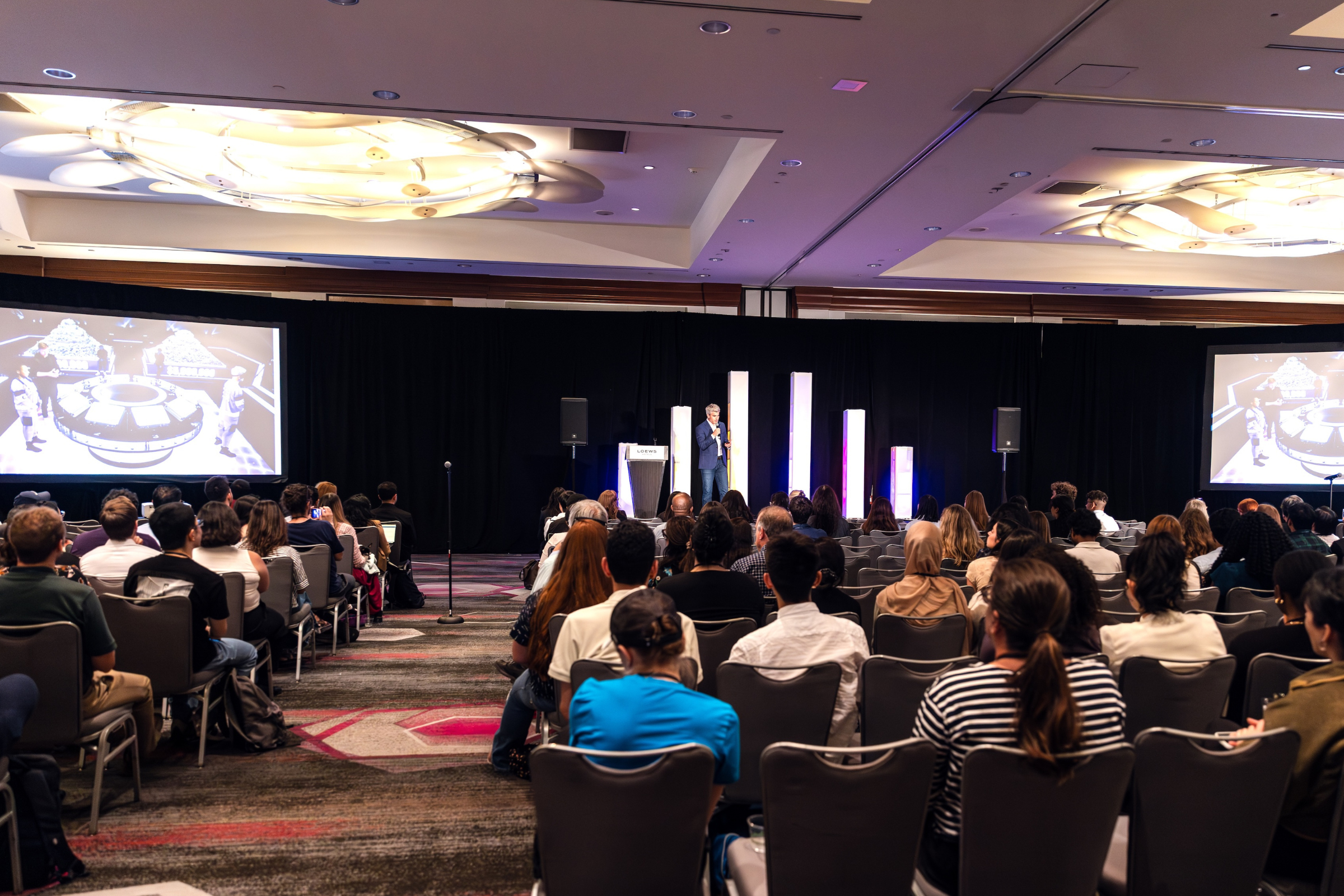
The audience was filled with students—future doctors and researchers who are taking part in educational programs created by CIRM. These initiatives provide students with mentorship, funding, and the skills they need to pursue careers related to regenerative medicine.
For Allen, the opportunity to share his insights with the researchers and doctors of tomorrow was a powerful, meaningful, and hopeful experience.
When asked what he wanted to say to the students who might find a cure for CTD in the future, Jeffrey said, “people and parents like me need help, but have a ton of hope and are the holders of hope. It’s up to you to harness your gifts, talents, and brilliance to be the builders of cures. I think together we can do some amazing stuff.”
Allen also highlighted why it is critical for everyone, regardless of their interests or profession, to have a fundamental understanding of biology and science.
“Biology was probably my least favorite science in high school,” said Jeffery. “But it is important for me to understand it, especially right now. In science, there are so many discoveries that are being uncovered and put into practice quicker than I’ve ever seen.”
These rapid and scientific discoveries and developments bring Allen hope. “At the end of the day, we need to figure out where do we put our attention and funds,” he said. “We’re going to find a therapy for this, and it’s up to us to help shepherd these funds in the right direction so it happens sooner than later.”
 The Stem Cellar
He is an amazing guy. Out of all of the people in beast games he was most deserving of it.