written by Holly Alyssa MacCormick

Alicia Langenhop was seven months pregnant with her third child when she and her husband, Jon, learned that their two toddlers had a life-threatening immune disease called leukocyte adhesion deficiency-1 (LAD-1). The odds of being born with LAD-1 are rare, literally one-in-a-million, but the disease is genetic, so the Langenhop’s unborn child had a roughly 25 percent chance of having the disease.
LAD-1 is caused by gene mutations that limit or (in severe cases) block production of a protein (CD18) that white blood cells need to access and work in infection sites. This protein is so vital for a healthy immune system that few kids with severe and untreated LAD-1 survive to adulthood.
The clock was ticking for the Langenhop family, but fortunately, time was on their side. Not long after receiving a diagnosis, the Langenhop children were invited to participate in a CIRM-funded clinical trial of a genetic therapy to treat LAD-1 developed by Rocket Pharmaceuticals.
“We do feel really fortunate living in a country and in a time with modern medicine and access to healthcare,” said Alicia.
The therapy was so successful that it restored immune function to all nine participants in the clinical trial. A summary of the results was published in the New England Journal of Medicine in 2025.
Life with LAD-1
When Ava and Olivia (just 3 and 2-years old at the time) were diagnosed with LAD-1, both children had already been hospitalized for severe infections twice.
“Since Ava was 2-weeks old, she was sick all the time,” said Alicia. “When Olivia was born a year and a half later, she followed the same pattern of constant ear infections and any respiratory virus she contacted she would get. I worked at a daycare and the girls came with me. We thought we were just unlucky and they were picking up every single germ that the daycare had.”
After Ava and Olivia were diagnosed and their third child, Landon, was born, and tested positive for LAD-1, life changed for the Langenhop family. Alicia stopped working at the daycare—the risk of infection for her kids was too great. The loss of income, combined with medical bills, made finances tight. Caring for their children when they had a scratch or a fever shifted after the diagnosis, too.
“Before we had the diagnosis [deciding to go to a doctor] was a toss-up,” said Alicia. “Are we overreacting? Are they actually sick? Do they need to be seen, or can we just stay home? And it was just…you’re never right. You either take them in and it’s nothing, or you don’t take them in, and you should have taken them in sooner. Once we knew [they had LAD-1], it was automatic; we had to go to the hospital [if they had a fever], but we just never knew how bad it was going to be.”
Bone marrow transplants were suggested as a possible therapy for the kids, but neither of the girls had a match on the bone marrow transplant registry. A bone marrow donor was found for Landon, but even with a perfect donor match the odds of the bone marrow transplant working were only about 75 percent.
“Ava would ask me, ‘Mommy, how come we don’t go to school anymore, and we just take medicine all the time and go to the doctor?’,” said Alicia.
The Langenhops were searching for a miracle. And then a miracle found them.
Life after LAD-1
Jon’s brother shared the family’s story on social media to encourage more people to join the registry as potential bone marrow transplant donors. Their videos inspired hundreds of people to register as potential donors, and they caught the attention of Donald Kohn, distinguished professor of microbiology, immunology, and molecular genetics at the University of California, Los Angeles (UCLA). He was one of three principal investigators on the clinical trial for the LAD-1 gene therapy, and he invited the Langenhop kids to enroll in the trial.
“It was a big decision [to enroll in the trial], but we’ve always trusted science and medicine, and the gene therapy didn’t carry the same risks as the bone marrow transplant,” said Alicia. “It just felt like it was fate. This trial’s happening right now, when we find out that all three of our kids need this intervention.”
“The worst outcome of it seemed like we’d be back at square one, still needing a traditional bone marrow transplant,” said Jon. “In our minds, it was a no-brainer to go ahead with the clinical trial and at least see it out.”
In December 2019, just three months later, the Langenhops were flying to UCLA to have Ava’s stem cells collected. By April 2020, the Langenhops had moved from Ohio to California to live there for eight months while their children were treated in the clinical trial.
The treatment included the gene therapy for LAD-1, chemotherapy, and several other medications. Ava, Olivia, and Landon’s immune systems were especially vulnerable at that time, and they needed to quarantine. In a second twist of fate for the family, nearly everyone was staying home at that time because of the COVID-19 pandemic.
A second shot at a normal life
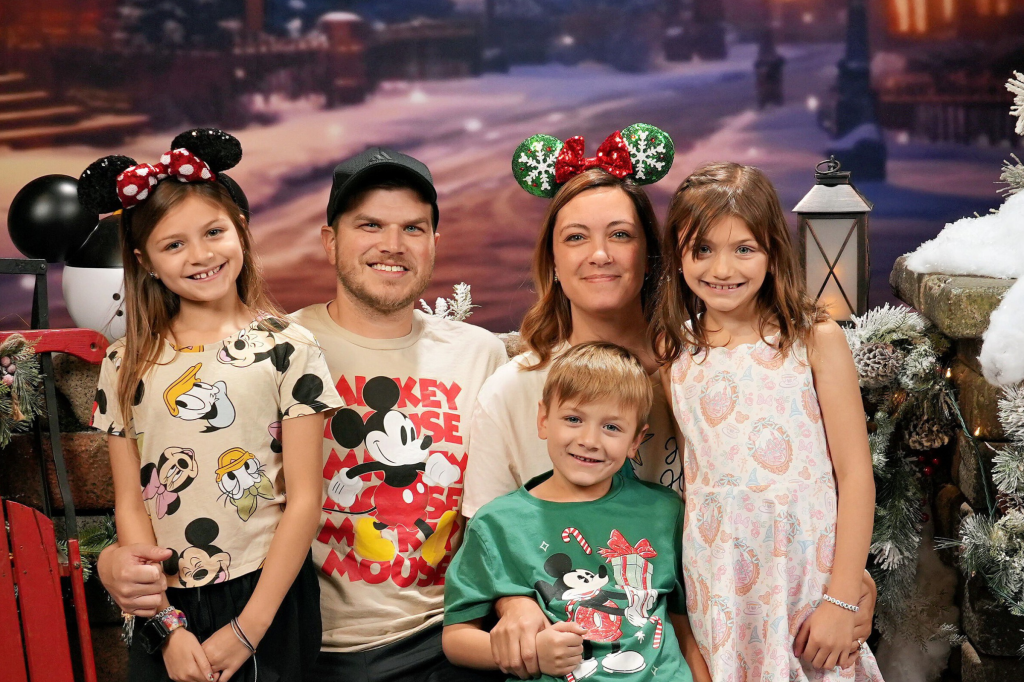
In May of 2021, the family got the all-clear that Ava, Olivia, and Landon could go back to daycare. Landon was the first to get sick after the kids returned to school, but his immune system worked, and he recovered from it just like other kids with a cold.
“They were so excited [to go back to school],” said Alicia. “Olivia wanted to get her ears pierced, but we had been holding off on that. … Just getting to play with other kids and going back to school … they couldn’t wait.”
Now the kids are in school, playing sports, and joining all the extracurricular activities they can.
“They are just normal kids,” said Jon. “They’re like, ‘let’s go!’”
 The Stem Cellar