Written by Holly Alyssa MacCormick
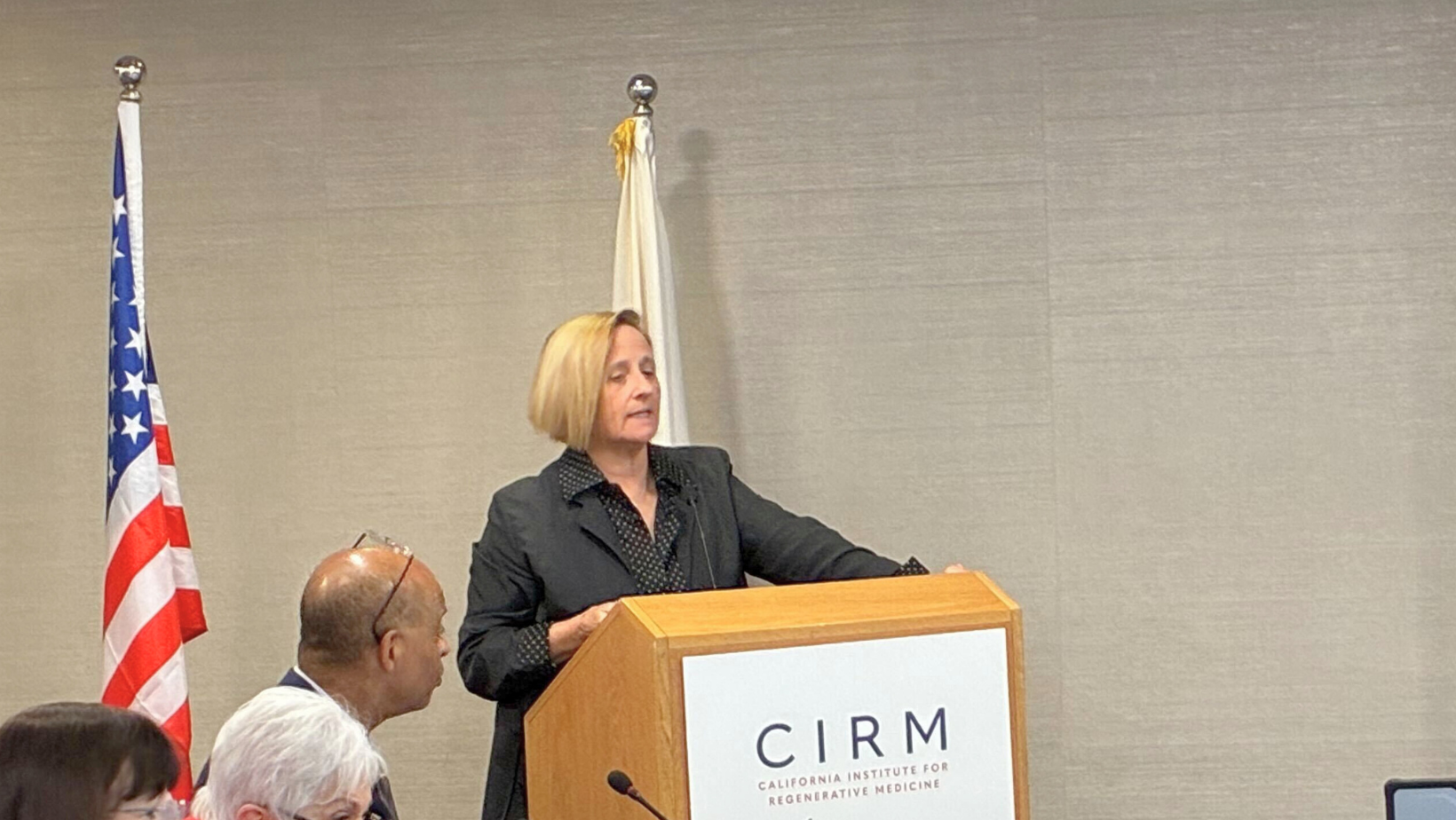
In 2023, the California Institute for Regenerative Medicine (CIRM) funded a clinical trial led by Stanford researcher Crystal Mackall, MD, to investigate a possible therapy for rare brain and spinal tumors that arise from a specific genetic mutation, known as H3K27M.
These cancers are devastating. Each year, about 1,000 people in the United States are diagnosed with these diseases, which disproportionately affect kids and young adults by attacking the glial cells that anchor nerves in place and help them function. There is no known cure, and the current treatment typically only prolongs the patient’s life a few months.
“Glioblastoma [glial cancer] is one of the major challenges in oncology,” said Mackall in a January 29 presentation to the CIRM governing board. Among gliomas, “this is the worst of the worst.”
Mackall, the founding director of the Stanford Center for Cancer Cell Therapy and the director of the Parker Institute for Cancer Immunotherapy at Stanford, gave her update as part of the Closer to Cures speaker series, highlighting progress of CIRM-funded clinical trials.
Killing cancer with CAR-T cells
Researchers have known the underlying molecular cause of these tumors, but turning these insights into a therapy that could target them has remained elusive.
Then, Stanford neuro-oncologist Michelle Monje and her team made a big discovery while studying brain samples from patients with the two cancers. They found that the molecule driving the cancer also induces production of a fatty sugar called GD2, which heavily coats the cell surfaces of these tumor cells.
“When Michelle made this discovery, she knocked on my door and said, ‘aren’t you working on this target, developing immunotherapies?’” said Mackall. “And, in fact, my lab had been developing a chimeric antigen receptor specifically to target GD2 … [the answer] was hiding in plain sight. We just didn’t know enough about the tumor.”
The therapy Mackall, Monje, and their teams created uses a technique called CAR-T therapy to “train” the patient’s own immune system to identify the cells based upon GD2 expression and then destroy the cancer cells.
Here’s how it works: The researchers take some of the patient’s immune (T) cells out of their body and modify them with a genetically engineered molecule called a chimeric antigen receptor (CAR), so they seek out a specific molecule on the surface of cancer cells (in this case, the sugar GD2). Then they inject the re-engineered T cells back into the patient’s body, where they target cancer cells for destruction by the immune system.
So far, approximately 50 patients have participated in phase 1 of the clinical trial. A summary of results for the first 11 participants was published in Nature. Nine of 11 patients had a significant improvement in the disabilities caused by their disease, four of 11 patients had tumors that shrank by more than half, and one patient had their tumor completely disappear.
Initially, some patients experienced toxic side effects.
“This is where the CIRM funding is so critical,” said Mackall. “If you just conduct a trial and you report outcomes without understanding the why, you have really failed because the whole purpose is to understand how these therapies fail… It’s the whole process of iterative improvement. We work very hard to understand all of this, and we study every patient in great depth.”
By studying the participants and their responses to the therapy, the researchers were able to modify the treatment protocol, significantly reduce the side effects, and improve the effectiveness of the treatments.
Next, the researchers plan to expand the clinical trial to institutions beyond Stanford.
“This funding has absolutely allowed us to perform this potentially paradigm-shifting trial in diffuse midline glioma,” said Mackall. “And our patients appear to be living longer and experiencing a better quality of life following the treatment, which is exactly what we all want.”
Closer to Cures is a speaker series that features presentations from two CIRM-funded grantees at each of the California Institute for Regenerative Medicine’s governing board meetings, known as the Independent Citizens Oversight Committee (ICOC). The ICOC meetings and this speaker series are open to the public and are livestreamed via the CIRM official YouTube channel.
 The Stem Cellar