Written by Holly Alyssa MacCormick
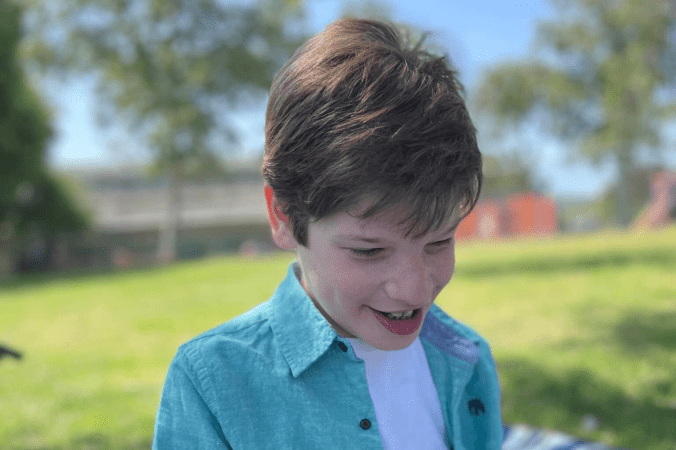
Wanting the best for your child is a universal experience, and Audrey Davidow wanted her baby to have a bright future full of possibility. But in March of 2012, her 13-month-old son Calvin was diagnosed with a rare disease called Pitt Hopkins Syndrome, and she was given little hope that he could have the kind of life she wished for him. So, Davidow started creating her own hope by advocating for research that may, one-day, lead to a treatment or cure for Calvin and others like him.
As part of these efforts, this September, Davidow advocated for research under review for funding by the governing board of the California Institute for Regenerative Medicine. At the meeting, the governing board was deciding on which proposals to fund, and one of those proposals had the goal of better understanding what we know and what we have yet to learn so researchers can eventually devise a way to activate the short RNA molecules, called sRNA, that affect gene regulation for under expressed gene(s) that cause Pitt Hopkins Syndrome and related genetic diseases.
“I’m the president of the Pitt Hopkins Research Foundation and above all the mother of a 14-year-old son with Pitt Hopkins Syndrome,” said Davidow. “Pitt Hopkins has been described as autism, epilepsy, severe breathing disorders, cerebral palsy, and profound anxiety all rolled into a child. We live with the desperation of knowing there’s no medicine designed to help them. That’s why I’m here today to strongly support the Iris Medicine DISC0 application.”
CIRM’s DISC0 Foundation Awards, which are a part of the Discovery Stage Research programs, support discovery research aimed at better understanding a disease or its cause. This work lays the foundation for future clinical trials, such as the more than 115 trials CIRM funds throughout the state.
At that meeting, CIRM’s governing board awarded a total of $73 million for 23 research projects, including the study proposed by Chi Zhang of Iris Medicine, Inc., that Davidow had advocated for.
Calvin’s story
Davidow’s son Calvin was diagnosed with Pitt Hopkins Syndrome when he was 13-months old. At the time, only about 250 children in the world were known to have this genetic, neurologic disorder. The disease is so rare, the geneticist at the University of California, Los Angeles hadn’t heard of Pitt Hopkins syndrome before Calvin was diagnosed with it.
“Reading what little information there was on Pitt Hopkins was pretty traumatizing,” said Davidow. “The prognosis was not good. Our child would not walk, talk, or even be able to use their hands purposefully to learn sign language. And, as much as we try to remain hopeful, a lot of that is true. He cannot even hold a book and turn a page or accurately swipe an iPad to watch his favorite shows. It affects every moment of his daily life.”
The disease affects every moment of his family’s life too. For severe diseases, like Pitt Hopkins syndrome, when one family member has a disease, everyone feels the impact.
“Everything sort of revolves around my son’s care, and that takes its toll on the whole family,” said Davidow. “Of course, whatever challenges we have pale in comparison to the challenges that he has. He wakes up, he has a morning flush through a tube surgically inserted in his abdomen so he can go to the bathroom. That takes about an hour. Then, we bathe and feed him. He self-injures a lot, so we are constantly vigilant that he’s not hitting himself.”
It is hard to fully fathom the grip that disease has on a person and their family unless you have experienced illness yourself or you’ve cared for someone severely impacted by illness. That’s why CIRM includes patient advocates as members of the board and encourages them to share their perspectives with the board, researchers, and others.
When patients are able to share their experience themselves, their perspective can help inform research to treat and cure their illness. Calvin can use a letterboard to communicate using shorthand, but typing requires a significant amount of time and effort, so his messages are short and to the point.
“Thank you, CIRM,” Calvin writes. “Please hurry.”
“Cures, of course, are always the goal, but I don’t necessarily hope for a full-blown cure,” said Davidow. “I hope for better hand use, so that my son can hold a book. I hope for some vocalization or verbalization so he can communicate his needs and wants. I hope that he can use his hands so he can feel more independent and feed, dress, and bathe himself. Those kinds of things would be huge.”
Creating hope
Research is a primary source of hope for families like Calvin’s. A cure, or even a treatment that could alleviate one or two of Calvin’s symptoms would be life changing. Zhang knows the significance of his work for Audrey Davidow and her family.
“Genetic medicine has really transformed lives for kids with genetic diseases such as spinal muscular atrophy and, now increasingly, kids with Dravet Syndrome and Angelman Syndrome,” said Zhang, referring to diseases that, like Pitt Hopkins, arise from mutations. “This is really what gets me up every day and gets me excited about coming into lab.”
Pitt Hopkins Syndrome is one of many genetic disorders that occurs when just one of the two gene copies contains a mutation. In the case of Pitt Hopkins, that gene is called TCF4. The result is intellectual disabilities, developmental delays, constipation, breathing problems, repetitive hand movements, and seizures. Pitt Hopkins Syndrome is rare, but studying it has the potential to help many people because the disease is similar to forms of Autism Spectrum Disorders, Angelman Syndrome, Mowat-Wilson Syndrome, Rhet Syndrome, and other genetic disorders.
Zhang’s newly funded study will investigate 10-15 different target diseases like Pitt Hopkins. His study is the second CIRM-funded a research project that can hopefully address Pitt Hopkins. Specifically, this newly funded study will investigate a new treatment modality involving small activating RNAs and associated knowledge gaps of gene activation across the 10-15 targets. Previously, CIRM awarded $4M to fund a gene therapy study led by Dr. Allyson Berent of Mahzi Therapeutics that aimed to repair the broken gene copy in the TCF4 gene pair.
“Everybody has two copies of TCF4, but it’s such an important gene that you need both copies functioning at full speed,” said Davidow. “In Pitt Hopkins, one copy is not functioning. Rather than try to fix that broken copy, as in Berent’s study, Zhang’s approach is to investigate ways to make the functioning gene copy more productive.”
Davidow’s understanding of the disease and valuable insights on how it impacts daily life are an important part of Zhang’s research process.
“Patient families help us not only learn from their perspective but also know what we should look out for in our pre-clinical studies,” said Zhang. “They help us design our studies. Patient advocates such as Davidow and members from the Cure Syngap1 organization are amazing, and it’s impressive how much patient families and patient foundations have done to move us forward. I think we are great partners in achieving the same goal.”
For Davidow and parents like her, improving her child’s quality of life is the end goal.
“I’m really grateful that CIRM is focused on science that’s going to change lives,” said Davidow. “The work that they do makes me so proud to be a Californian. I feel so lucky and grateful.”
 The Stem Cellar