Written by Holly Alyssa MacCormick
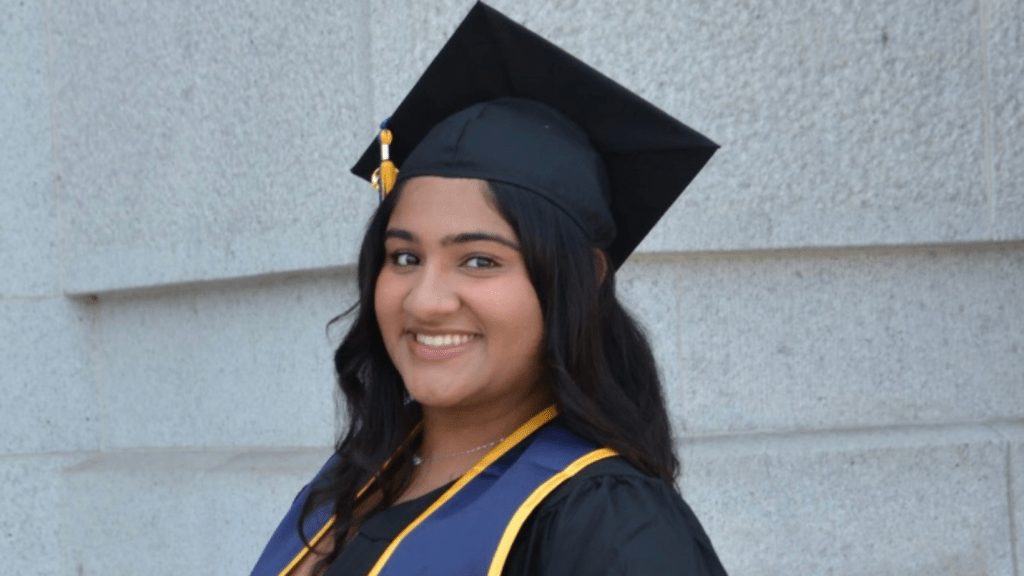
Many paths can lead to a career as a physician. For undergraduate Maya Singh, the road to becoming a doctor begins at a laboratory bench in the University of California, Berkeley.
“I believe that being a part of research is a huge step toward being a practicing physician,” said Singh.
A desire to improve existing cancer therapies and—one day—prevent cancer before it starts, inspired Singh to take part in the California Institute for Regenerative Medicine (CIRM) Creating Opportunities through Mentorship and Partnership Across Stem Cell Science (COMPASS) program, an initiative that pairs undergraduate students with mentors who are experts in stem cell research and related fields. CIRM’s COMPASS program helps undergraduates gain hands on experience in the lab via 16 colleges and universities distributed throughout California. One such program is housed at the University of California, Berkeley and is available to members of the Biology Scholars Program led by director and co-founder John Matsui.
From lab to clinic
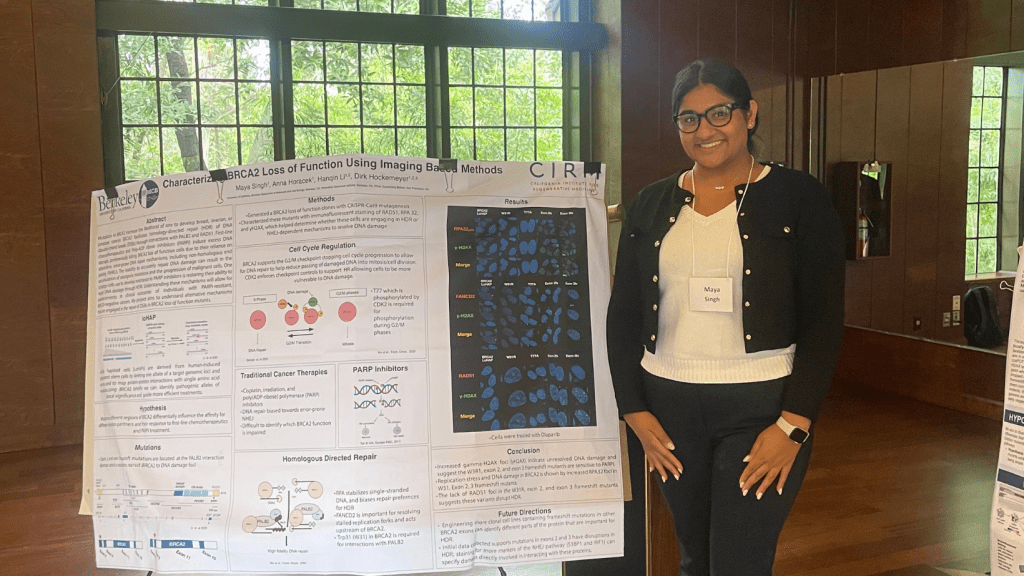
As a COMPASS scholar in the June 2024 to May 2025 cohort, Singh worked with Associate Professor of Cell and Developmental Biology Dirk Hockemeyer and graduate student Anna Horaceck to characterize harmful mutations a tumor suppressor gene, known as BRCA2. Loss of function in this gene is associated with breast, ovarian, prostate, and pancreatic cancers.
Undergraduates can be a scholar in CIRM’s COMPASS program for one or two years, depending on how many months of college they have left until they graduate. As a scholar, they benefit from financial support, mentorship, professional and career development activities, coursework related to stem cell research, community outreach opportunities, and the opportunity to share their research in a capstone presentation at the end of the program.
COMPASS scholars typically dedicate 10-12 hours a week to research in addition to their usual coursework as an undergraduate. For Singh, this involved going to the lab two to three days a week to work with her mentor on specific tasks.
“In the beginning, I familiarized myself with the literature related to my project,” said Singh. “Then I became more independent—I started running my own PCRs, I learned different assays, such as immunofluorescence chemistry, and I attended lab meetings.”
Part of the research community
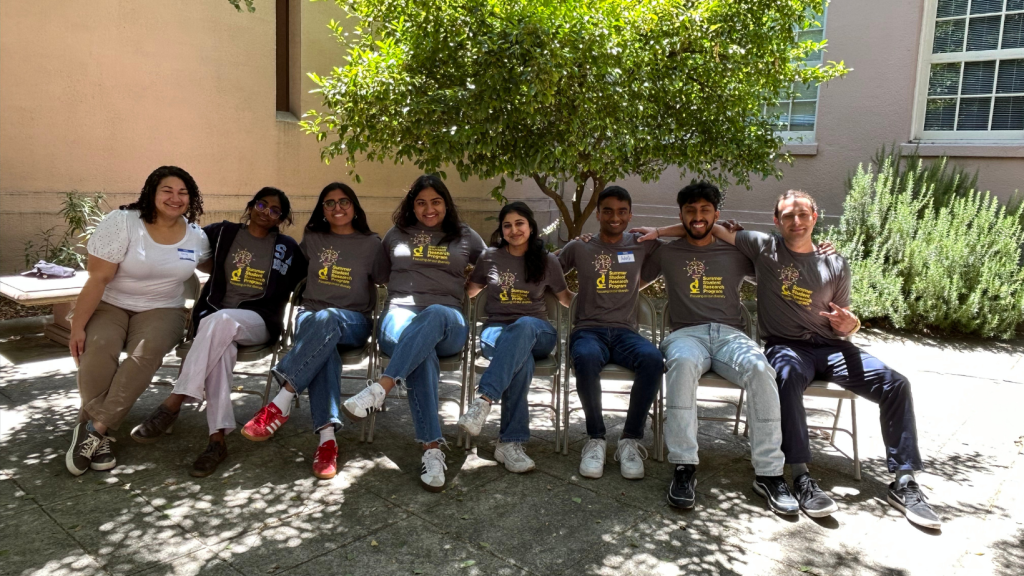
Feeling included in the research community was especially meaningful for Singh.
Being welcomed into lab meetings “was a really pivotal experience, because I was able to interact with all the members in my lab and really learn about their different projects,” said Singh. “That was inspirational.”
Recently, Singh took part in the 2025 CIRM trainee conference, held in Los Angeles July 27-29. At the conference she networked with the community of COMPASS scholars that extends across California, engaged with stem cell researchers, and listened to talks by patient advocates.
“CIRM’s COMPASS program has provided me with opportunities to connect to other areas of science and appreciate the vast diversity within science,” said Singh. “That’s something that I didn’t have before. … This allows trainees to become inspired by the different realms of science and learn about all the various things you can do in science.”
Having a greater understanding of the many opportunities and careers available in sciences is especially helpful because many of the skills scholars learn in the COMPASS program can apply to any career related to science, Singh explained.
Singh is already putting her experience and training as a COMPASS scholar to work as a master’s student in the medical health science program at Touro University California. Next, she plans to transfer to their College of Osteopathic Medicine to pursue a medical degree
She credits the COMPASS program with teaching her the organizational and research skills to make these next steps in her career. Managing research and research activities in addition to coursework was challenging at first, Singh explained.
“I am very thankful to CIRM for sponsoring me and enabling me to develop the skills needed to become a physician in the future,” said Singh. “I’m also grateful to the Biology Scholars Program at the University of California at Berkeley for offering the COMPASS program as an opportunity for students, to Drs. John Matsui and Emily King for being so supportive throughout this entire journey, and Dr. Dirk Hockemeyer and Anna Horacek for taking me under their wing and providing mentorship to me as a COMPASS scholar. Being able to find the support you need takes you a really long way!”
 The Stem Cellar