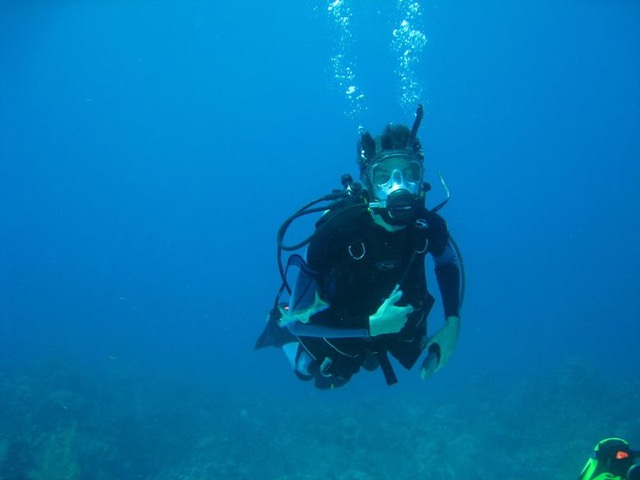
In 2007, Justin Graves was working at a SCUBA shop in Louisville, Kentucky, when he had his first epileptic seizure. “SCUBA diving has just been something I’ve loved my whole life,” he said. “My whole family loves it.”
Justin had to give up diving as well as his work as a dive instructor, and like others who get seizures, he could no longer drive himself. There are medications available to reduce seizures, but they were ineffective for him, as they are for approximately 30 percent of individuals. Until three years ago, Justin was drinking heavily, which may have affected the effectiveness of his medications. Since then, he has made positive changes that enhance the effectiveness of his medications.
Eventually, Justin relocated to California, where his doctors at the University of California, San Diego informed him about a clinical trial for which he was a candidate. It was being operated by South San Francisco-based biotech company, Neurona Therapeutics, which has received $18 million from CIRM over the years to support work developing and testing stem cell-based therapies for epilepsy.
Justin said about his decision to participate, “I guess at first I didn’t think too much about it, just that it sounds great for the advancement in medicine.”
The trial tested a potential therapy called NRTX-1001, in which scientists at Neurona matured human embryonic stem cells into a type of neuron that quiets other brain cells. The idea was to inject these calming cells into the overly active region of a participant’s brain, where seizures originate, in the hopes of reducing or eliminating the seizures. Justin had his procedure in 2023 at UCSD by Sharona Ben-Haim, MD.
This trial was specifically looking at patients whose seizures emanated from one side of the brain and who weren’t responsive to drugs. Another CIRM-supported phase 1/2 trial will test NRTX-1001 in adults whose seizures are not responsive to drugs and emanate from both sides of the brain.
The MIT Technology Review published an article about the clinical trial and quoted Dr. Ben-Haim, who stated, “The concept that we can offer a definitive treatment for a patient without destroying underlying tissue would be potentially a huge paradigm shift in how we treat epilepsy.” Other surgical treatments for epilepsy involve removing or destroying overactive areas of the brain, which can lead to side effects like memory or vision loss.
Early improvements in Phase 1
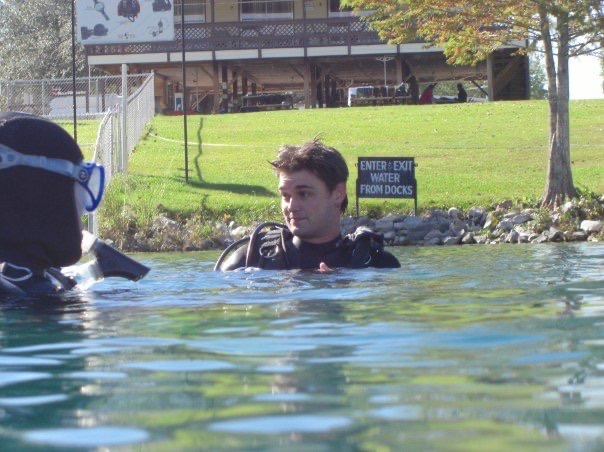
The trial at the time was classified as Phase 1, which primarily tests the safety of the potential therapy. However, Justin mentioned that he began to notice improvements within a month. He no longer experienced grand mal seizures and only had small seizures, called auras, a few times each month.
“When that’s going on, it’s perfectly fine, so long as I’m not having a detailed conversation,” Justin said of when he experiences the auras. “If I’m in a more detailed conversation when that comes on, I have to stop for maybe 30 seconds and just let that clear over, and then I’m good to go.” He mentioned that he has experienced a few additional incidents recently, but he has also been under stress, which can exacerbate symptoms.
Neurona is planning a Phase 3 trial that will involve a significantly larger number of patients to better assess the effectiveness of their potential therapy. If the trial is successful, they can submit NRTX-1001 to the FDA for approval for general use.
Justin is glad that he decided to take part in the clinical trial. “I love the idea of being able to help not just a few people with some issues, but the entire world,” he started. “That’s just a huge step forward to me.”
Written by guest contributor Amy Adams
 The Stem Cellar
Sent from my iPhone