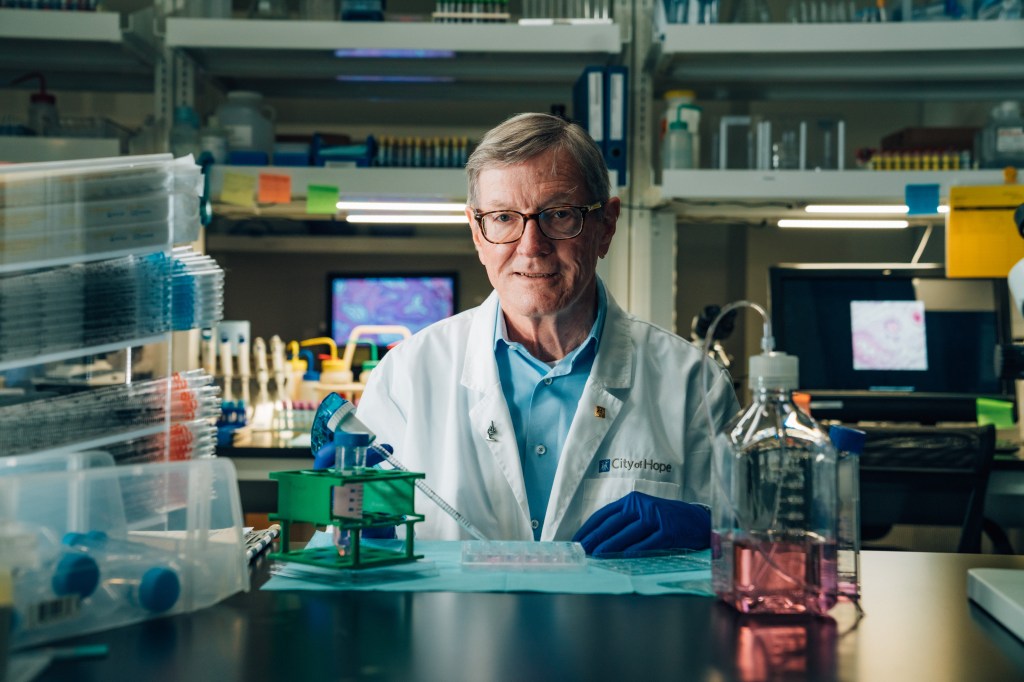
The scientific community lost a true pioneer with the passing of John A. Zaia, MD, a visionary virologist, gene therapy trailblazer, and esteemed leader at City of Hope. Dr. Zaia dedicated over four decades to advancing regenerative medicine, leaving a profound impact on HIV research, pediatric diseases, stem cell transplantation, and cell and gene therapy.
As the founding director of the City of Hope Alpha Stem Cell Clinic, Dr. Zaia was instrumental in shaping CIRM’s Alpha Clinic Network, ensuring that innovative stem cell and gene therapies reached the patients who needed them most. His work was deeply woven into CIRM’s mission, with his creativity and altruism helping lay the foundation for many of the institute’s most impactful initiatives. Through multiple CIRM-funded projects, he explored stem cell-based treatments for HIV/AIDS, convalescent plasma therapy for COVID-19, and the development of advanced cell-based therapies for life-threatening diseases. His contributions not only advanced scientific discovery but also expanded access to transformative treatments.
Geoff Lomax, PhD, Associate Director for CIRM’s Patient Access Team, recalled his first visit to the City of Hope Alpha Clinic in 2016, where he toured the infusion clinic delivering immunotherapies to cancer patients.
“Dr. Zaia was exuberant about highlighting the teamwork behind these patient treatments, which required tight choreography between the clinical trial investigator, the nursing team, product pharmacists, and the patient navigators. His commitment to patients and collaborative spirit was infectious.”
Dr. Zaia’s dedication to patient-centered research was evident in the partnerships he forged across the Alpha Clinics Network. He worked tirelessly to ensure that the clinics were more than just research hubs—they were places where groundbreaking science translated into real treatments for real people.
A Leader in Science and Medicine
Dr. Zaia’s scientific contributions were nothing short of groundbreaking. His research on cytomegalovirus (CMV) and varicella in immunocompromised individuals helped protect vulnerable patients, particularly those undergoing bone marrow transplants. He played a key role in pioneering HIV-targeting CAR T cells, which are now in clinical trials and hold the potential to provide long-term viral suppression. His leadership in the first successful allogeneic stem cell transplants at City of Hope paved the way for curative therapies for countless patients worldwide.
His work with CIRM reflected this passion for pushing the boundaries of medicine. His research on zinc finger nuclease-based stem cell therapy for AIDS aimed to develop a functional cure for HIV by modifying a patient’s own stem cells to resist infection. Another project, focused on evaluating SARS-CoV-2 antibodies in convalescent plasma, sought to harness the immune response of recovered patients to fight COVID-19. His leadership also helped establish the Innovation-Alpha Clinic for Cellular Therapies (I-ACT), ensuring that novel cell-based treatments reached clinical trials and, ultimately, the patients who needed them most.
Michael Lewis, MD, Alpha Clinic Director at Cedars-Sinai, recalled Dr. Zaia’s early work tackling some of the most devastating diseases:
“When I first arrived at City of Hope in 1983, CMV pneumonitis was a fatal scourge of the young bone marrow transplant program. Also, AIDS was presenting itself. For both, there were no effective treatments, with very high mortality rates. I remember a young John Zaia who was passionate about working out ways to tackle these lethal problems—a passion that became, with many other groundbreaking ventures, a lifetime of work and contributions. Even then, he was the consummate gentleman, children’s doctor, advocate, and researcher.”
Beyond his scientific achievements, Dr. Zaia was also a mentor and a guiding force. Leo Wang, MD, PhD, Associate Professor of Pediatrics and Immuno-Oncology at City of Hope, described him as:
“A gentleman and a scholar, a voice of reason during anxious times, and a source of wisdom for many of us trying to navigate this world. He was perpetually curious and wondrously excited about everything.”
His ability to inspire and uplift others was a defining characteristic. Tom Buchanan, MD, Alpha Clinic Director at USC, reflected on their work together:
“I worked closely with John to establish a General Clinical Research Center satellite at City of Hope, where he was the site PI. Loved working with him—so smart, so kind, so dedicated to great translational science. Big loss to all of us.”
A Legacy That Lives On
Dr. Zaia’s impact extended far beyond science. He was a mentor, a gentleman, and a steady voice of wisdom in moments of uncertainty. His intellectual generosity and steadfast belief in others made him not only a brilliant scientist but also an irreplaceable colleague and friend.
Mark Walters, MD, Alpha Clinic Director at UCSF, shared:
“John’s passing is a blow to our mission in the Alpha Clinics, of course, but I will miss his intellect and humility in particular.”
Daniela Bota, MD, Alpha Clinic Director at UCI, added:
“He was a great mentor and friend. We will all miss him.”
The Alpha Clinics Network, which he helped build, will continue to shape the future of precision medicine and regenerative therapies. His work on HIV functional cures, CMV vaccines, and COVID-19 immune response studies has already changed lives and will influence the field for years to come. As Dr. Lomax put it:
“Dr. Zaia will be missed, and the commitment he brought to patients will carry on within the Alpha Clinics Network and beyond.”
 The Stem Cellar
Dr. John Zaia’s passing marks the loss of a visionary in regenerative medicine. His pioneering work in HIV research, stem cell transplantation, and gene therapy has left an indelible impact on the scientific community. Beyond his scientific achievements, Dr. Zaia was celebrated for his mentorship and unwavering commitment to patient-centered care. His legacy will continue to inspire future innovations in medicine.
Zaia was celebrated for his mentorship and unwavering commitment to patient-centered care. His legacy will continue to inspire future innovations in medicine.