 |
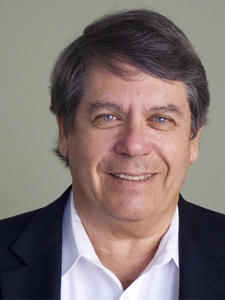
| Alan Trounson, CIRM President |
Each month CIRM President Alan Trounson gives his perspective on recently published papers he thinks will be valuable in moving the field of stem cell research forward. This month’s report, along with an archive of past reports, is available on the CIRM website.
My report this month discusses five journal articles including one that describes potentially game changing work in the field of cell reprogramming. That team succeeded in reprograming skin cells into iPS-type stem cells with only chemicals instead of genetic factors, which could be safer, easier and more cost-effective than current methods of reprogramming.
But, I want to focus this blog on two papers that both contribute to an important trend in stem cell science. They both coaxed stem cells into becoming complex structures by giving them an environment to grow in that more closely mimicked the environment of the embryo than standard lab cultures. This was one of the theme’s that ran through this year’s meeting of the International Society for Stem Cell Research in Boston in June. A colleague wrote about some related work from the meeting here.
One team from Yokohama in Japan became the first to create complex functional organ tissue from pluripotent stem cells. They turned iPS cells into the precursors of the main components of liver. But rather than growing them by themselves in the lab, they grew them along with two other types of cells that would have been their neighbors in the developing embryo. That combination of cells self-assembled in culture into small spheres that are precursors to mature liver, which the team called liver buds. When they transplanted those liver buds into the abdomen of mice they continued to mature forming functional liver tissue including the blood vessels that are essential for a liver to work. They showed that these rudimentary livers were able to produce proteins only produced in the liver and to metabolize drugs.
The second team, from London, created precursors to photoreceptors, light sensory cells in the eye, and got them to mature into cells that had the properties of functional photoreceptors. Others have succeeded in turning embryonic stem cells into early-stage photoreceptors, but until now no one has coaxed those cells to develop the layered structure of mature photoreceptors. Those cells need to include an outer segment packed with visual pigment that is needed to turn light into electrical signals that can be sent to the brain. The team got the more complete maturation by growing the cells embedded in a gel rather than growing on a flat surface. Again, this came closer to mimicking the environment the cells would have experienced in a developing embryo.
As our field moves increasingly into pre-clinical and clinical applications of the science, these sorts of more complex laboratory procedures will likely become commonplace.
My full report is available online, along with links to my reports from previous months.
Alan Trounson
 The Stem Cellar